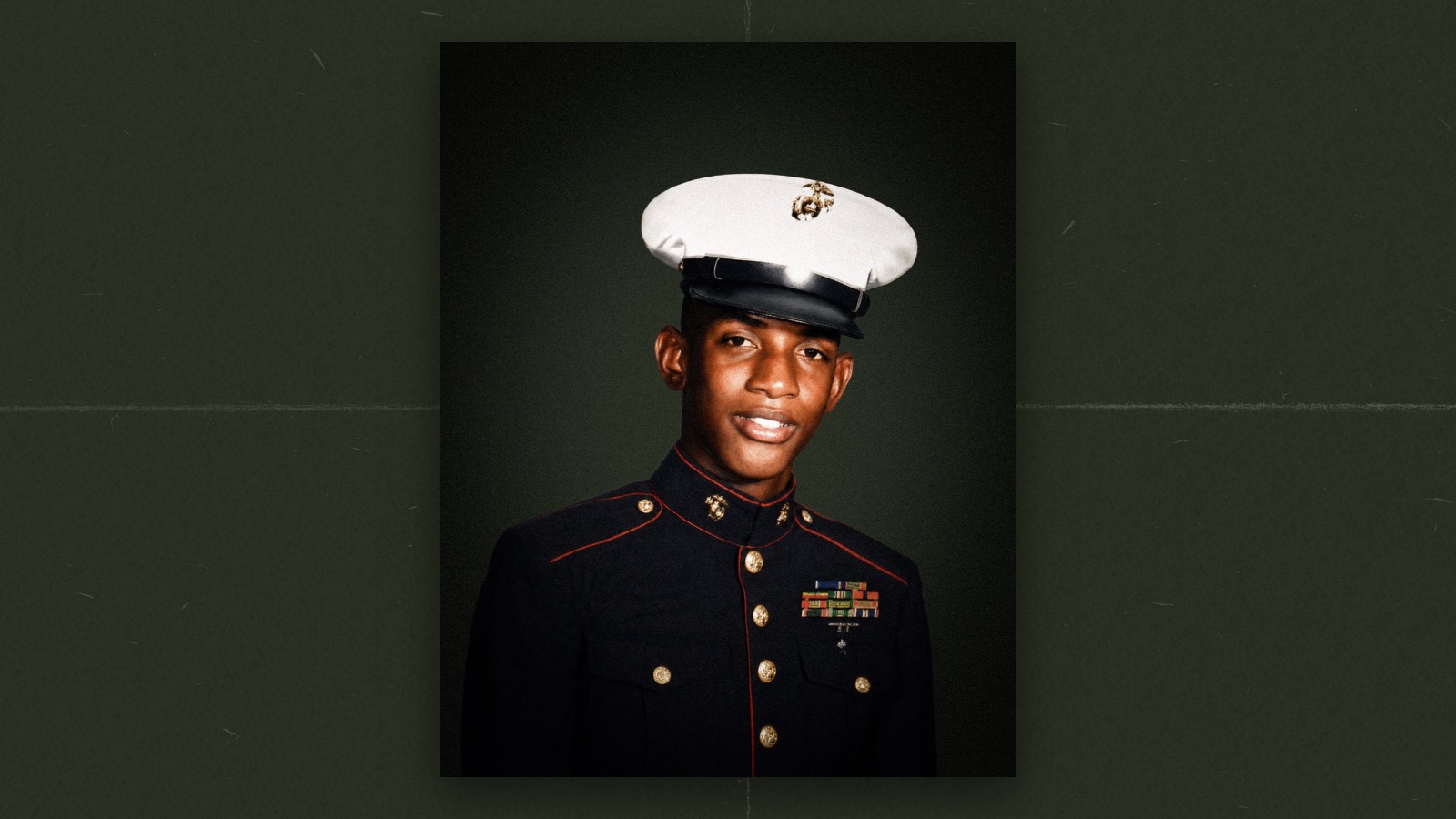
Roger Liggon, 1966
A legacy built from the heart
By Matt Valenzuela, Vice President of Operations
Roger Liggon was seventeen when he signed up for the Marine Corps. He was assigned to the 1st Battalion, 9th Marines, 3rd Marine Division, and he found there what a lot of Marines find and never forget: a set of brothers who became the closest thing to family a man can have.
Then the Corps did what the Corps does. He got orders out of the 1/9. He fought them. “I didn’t want to leave my guys,” he says. But orders are orders. He served with distinction, was honorably discharged, and became a civilian. Still a Marine, the way every one of us stays a Marine, but a civilian.
That should have been the end of it. For most men it would have been.
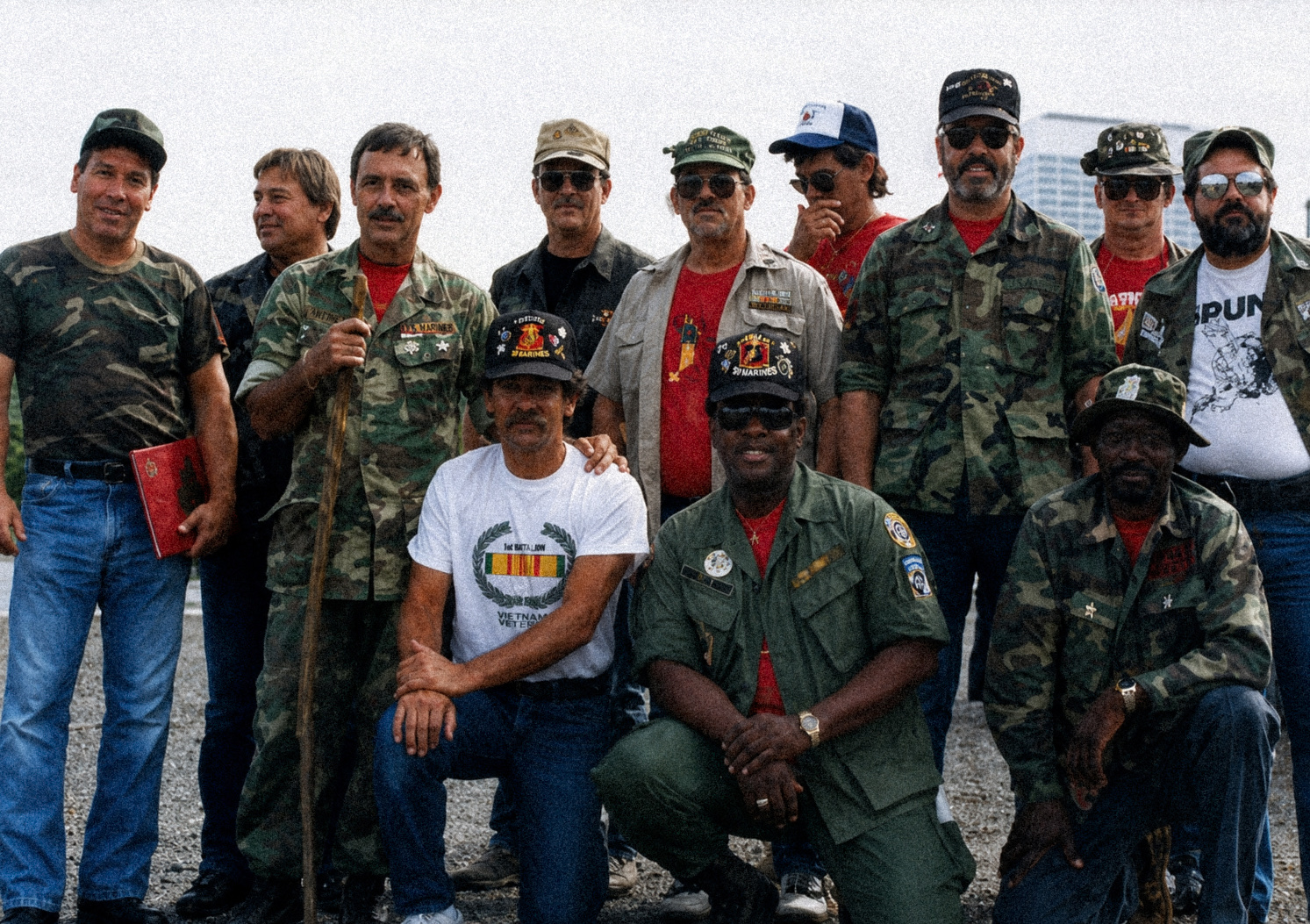
Years later, Roger heard about a Vietnam Veterans Welcome Home event in Cleveland, where one of his old 1/9 brothers lived. He went. And he found out his brother wasn’t the only 1/9 vet in the area. There were others. So he did the simplest thing a man can do, and the hardest to keep doing: he wrote down their names and contact information so he wouldn’t lose them again. He started a newsletter to keep everyone in touch.
Five copies. Then fifty. Then more than five hundred.
The list kept growing because the need was real. In 1989, that momentum carried all the way to a first official reunion in Washington, D.C. Roger expected fifty veterans to show up. More than a hundred and fifty walked through the door. A man’s refusal to lose his brothers had become a national organization.
Ask Roger why he did it and you don’t get a mission statement. You get the truth. “I wanted to see the guys, and I wanted to try to help the guys.”
The man behind it
To understand the vision, you have to understand the man, and the men who’ve been around him longest tell the same story.
Hopson has been with Roger since the inception. He talks about the hours and the effort nobody saw — the phone calls back when you paid by the minute, Roger spending an hour on the line with one Marine because that Marine needed an hour. “I’d be listening to Roger wondering, damn, can you pay for this call? But he was like that with everybody. He would listen to you.” Roger did it on his own dime, never asked anyone for anything, just did it. It’s that humility, Hopson figures, that draws people to him. “He’ll never get enough credit for what he’s done.”
At each reunion, my hug comes from deep within my heart.
That’s the engine underneath the whole organization. Not strategy. A man who would listen to you for an hour.
What he built
It would be easy to tell this story as one about an organization. It isn’t. Roger didn’t set out to build a nonprofit. He set out to make sure no 1/9 Marine had to stand alone, and the organization is just what that turned into.
He was always clear-eyed about what the Association could and couldn’t do. Years into leading it, he said plainly that the 1/9 Association never claimed to have a cure for the things combat veterans carry home. The sleepless nights. The drinking. The weight that doesn’t lift. He never pretended a reunion or a newsletter could fix any of that.
What he claimed was smaller and truer. A place where you know you are not alone. If the Association helped a man get one more hour of sleep, take one less drink, or understand that the problem might be his to carry and not his family’s to absorb, then to Roger that was the whole point. That was success.
You can see it work in real time at a reunion. One member, watching a brother across the room, put it this way: “I haven’t seen him laugh like that in ten years.” He’s not thinking about the bills that aren’t paid. He’s with the people he trusted most at the hardest time of his life, reminiscing the good and the bad. And as the same member said, once you can get those bad times out of your system, you heal.
David Murray knows that firsthand. He was struggling alone until a chance encounter at the Vietnam Memorial brought him back. He saw a 1/9 banner, met Roger, and found the support he needed. He hasn’t missed a reunion since. “He probably saved my life,” David says, “because I had something to look forward to.”
That’s the original sentiment, stripped to the bone: take care of the guys. And their families.
The legacy
Here’s what Roger may not have fully seen when he was printing those first newsletters: he wasn’t just keeping a brotherhood together. He was building a way for the dead to keep speaking to the living, and for families to find each other across decades.
If this organization has helped you get one additional hour of sleep, take one less drink... then I have accomplished more than I could have ever dreamed.
Ron Reyes never knew his father. Ronnie Reyes, Delta Company mortars, was killed in Vietnam on March 30, 1968. Ron spent his whole life trying to find out who his dad was. When the internet came along in the late nineties, he sent out eleven emails to anyone he could find connected to the 1/9. He didn’t know that the same weekend, a reunion was happening. His emails got passed around — not by forwarding, but printed out and handed person to person, the way Roger’s newsletter always traveled. After that reunion, the calls started coming. Men who knew his father. Men who served with him. One who was standing next to him when he was killed.
From that thread, Ron built a life he never could have predicted. He’s stood on the ground where his father fought. He and his wife are building houses in Vietnam. For three years he served as a Gold Star family fellow in the U.S. House of Representatives — a path that opened, in his own telling, because of this association and the network Roger started. “That little thing you did to start the network,” he told Roger, “led to all this.”
Roger had no way of knowing, when he wrote down those names, that he was building a bridge a son would one day walk across to find his father.
It happened more than once. Jack Couz lost his best friend in Vietnam in 1967 — a Marine who died of a leg wound because the choppers couldn’t get in, who never got to hold the baby his wife was carrying. At the second reunion, Jack invited that baby, now grown, to come. There the son heard from the Marines who served beside his father what kind of man he’d been, and how they’d honored him. Sylvester McKintosh kept a promise he made in Vietnam, searching fifty-three years for the family of his fallen friend John Avilla. In 2024, he found John’s son in Los Angeles. They sat down together at the reunion — a promise kept across half a century, in a room Roger built.
And the network doesn’t only reach backward. It catches people when life falls out from under them. James Vierstra lost his house to a fire on Thanksgiving Day 2014. Lost nearly everything. He didn’t even know the Association existed at first — but the brotherhood rallied around his family, and the connection eventually led his own son to the Marine Corps. “This association wouldn’t be here if it wasn’t for your ideas and your determination,” James says. “Look what it’s evolved to.”
The community
Roger built it for the guys. But the door he opened turned out to be wider than that, and that may be the truest measure of the vision. A brotherhood founded by Vietnam Marines became home to the families of the generation that came after them, whatever form their loss took.
Tina Ripperda’s son Aaron died in a training accident at Hawthorne — not deployed, waiting to get out of the Marine Corps when it happened. The brotherhood didn’t keep her at the edge of it. “They’ve accepted us as Gold Star families as part of their family.”
It’s open, too, to the families who lost someone after the uniform came off — the losses that don’t come with a folded flag and a battle citation. Abby Que’s husband, Kevin Schranz, was an OEF veteran who died after his transition out of the military. As a White Star wife, Abby found connection and understanding in the 1/9 that she couldn’t find anywhere else. “There’s power in being around people who have lived something that you’ve lived as well.” Jill Hirsh, also a White Star wife, found the same. “They reach out to me on my birthday, the girls’ birthdays, always checking on me. They’re the best people I’ve ever met in my life, because they actually care.”
And it’s open to the Marines who carried the name into a new century. Alex Hunt, an OEF veteran, came up decades after the men who founded the Association — and found the same thing they did. “You get a foundation with the one-nine. You get something strong you can lean on when you need it. Everybody’s going to be there for you, because they’ve dealt with all the same stuff, or even worse.”
A Gold Star mother, two White Star wives, a young veteran — all from the post-9/11 generation, taken in by an organization Vietnam built. None of them served in the 1/9 themselves. All of them belong to it. That’s not an accident. That’s the vision doing exactly what Roger built it to do.
Building a future
Look at what the Association does today and a pattern shows up. We hold reunions, the brotherhood face to face. We provide humanitarian relief when a brother or a family hits a wall. We send the children of 1/9 Marines to school.
Three programs. But they aren’t three separate things. They’re three faces of the same instinct Roger had standing in that room in Cleveland. People don’t fall apart in one dimension at a time. A man needs his people. He needs a way forward. He needs to keep his footing when life knocks it out from under him. Connection, opportunity, stability. Roger started reaching for all three the day he picked up a pen and wrote down a list of names.
That’s the foundation. The future we’re forging is what gets built on top of it.
The dream is bigger than any one program. A network where the brotherhood does the lifting. Where a vet who’s found his footing helps the one who hasn’t. Where a family that’s been through it walks the next family through it. Where the support runs member to member, family to family, generation to generation.
No problem any one of us has to face alone. That’s the goal. Not because we leap tall buildings or weather storms of bullets with nothing but grit. We’re Marines, not machines. We can’t do everything. But together, there’s very little this brotherhood can’t get a man through.
Roger proved that with a list of names and a refusal to quit. We’re still building on it. The Walking Dead lives, and we walk together.
From the August 2026 issue of The Proud Warrior. Read the full issue